Four decisions that shaped the work
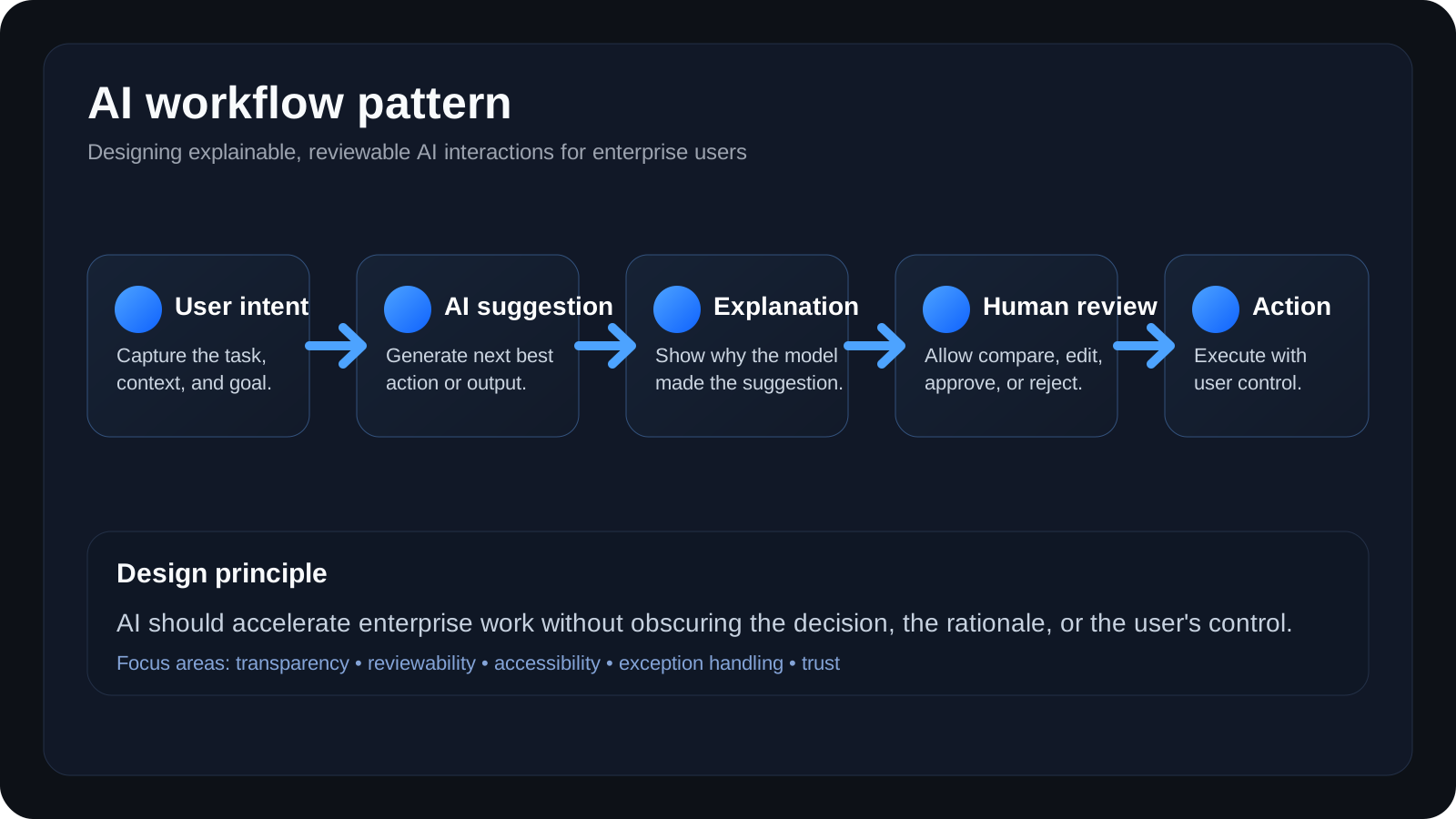
Each one traded a simpler build for something enterprise users needed: orientation, a way to start, control over the result, and evidence.
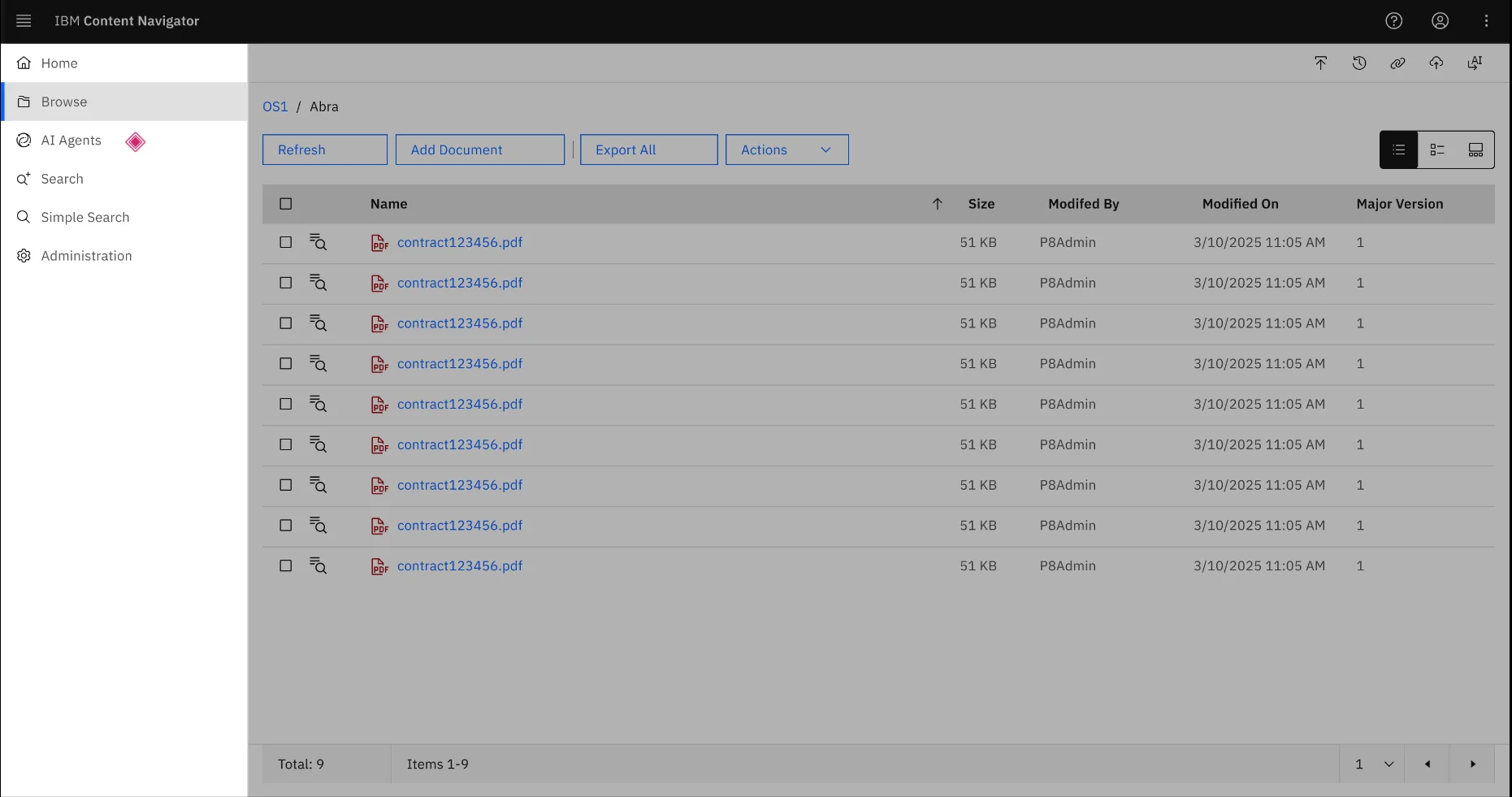
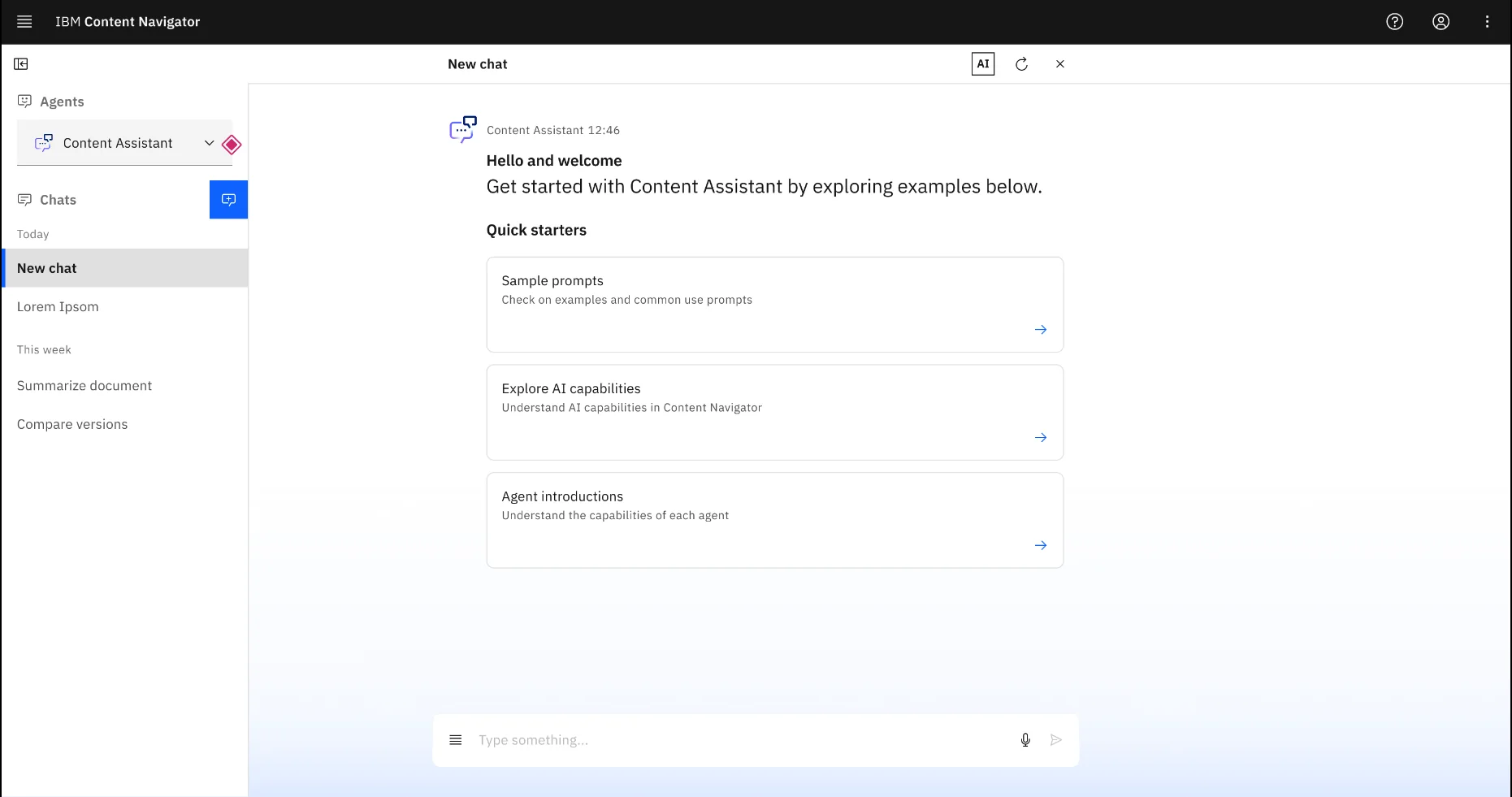
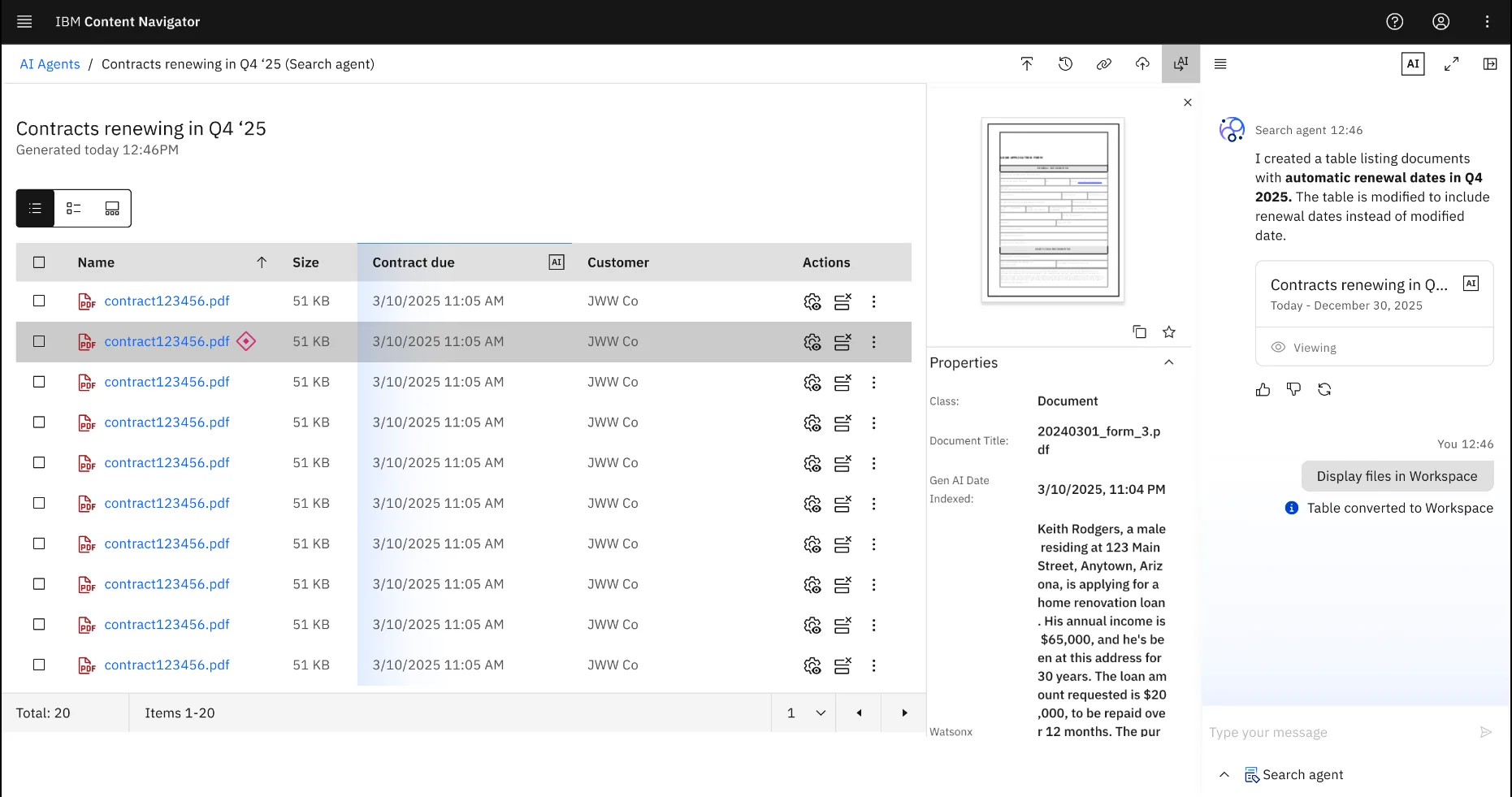
1Put the agent inside the workspace
Agents entered through the product’s existing navigation instead of a separate assistant window.
Why: users already knew where their documents lived. Keeping that orientation made the agent an extension of the work rather than a detour from it.
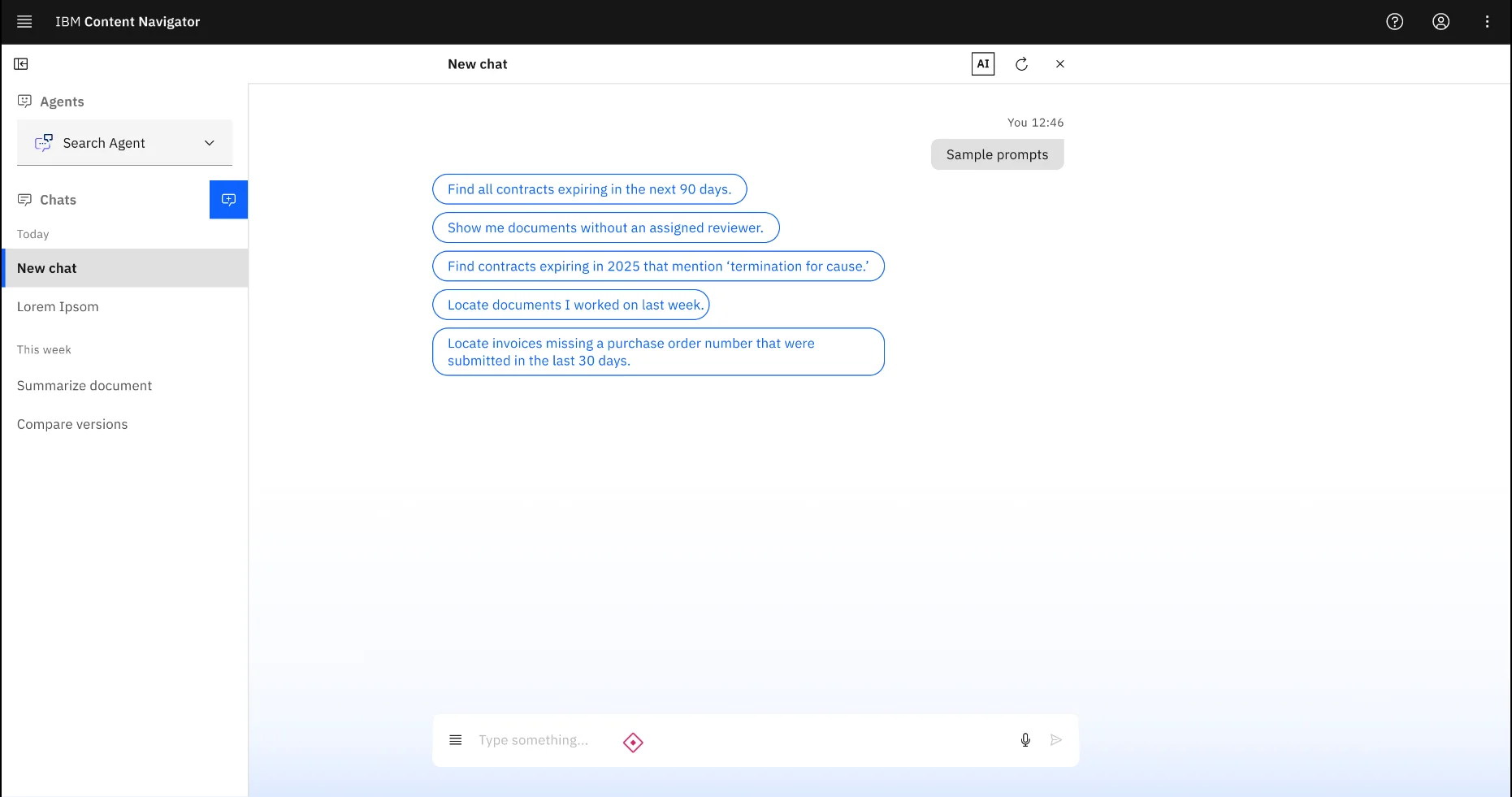
2Replace the blank prompt
Quick starters and task-shaped prompt suggestions showed what the assistant could do before asking users to phrase anything.
Why: an empty prompt box asks enterprise users to guess the right words. Starting points make capability concrete without removing natural language.
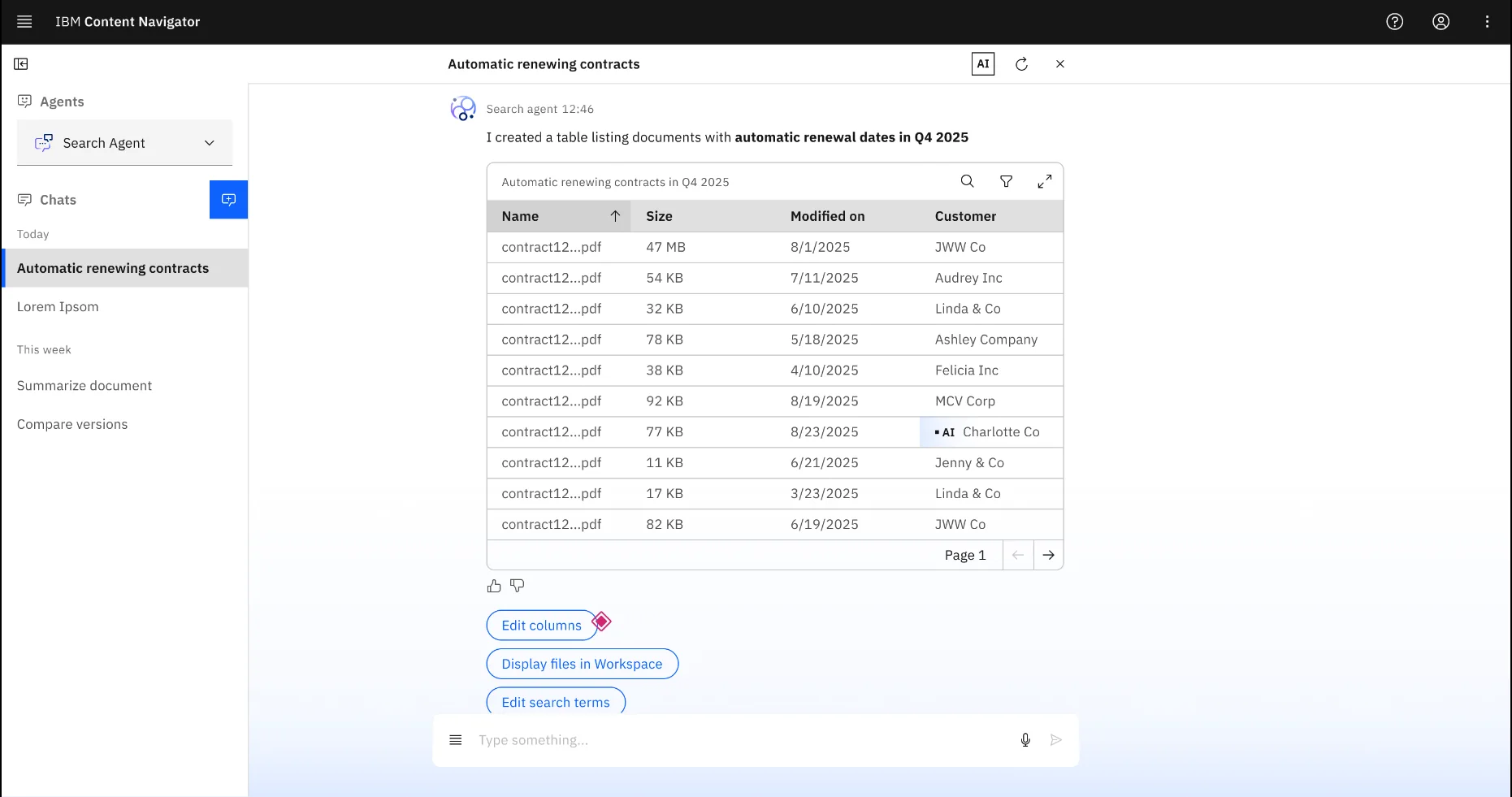
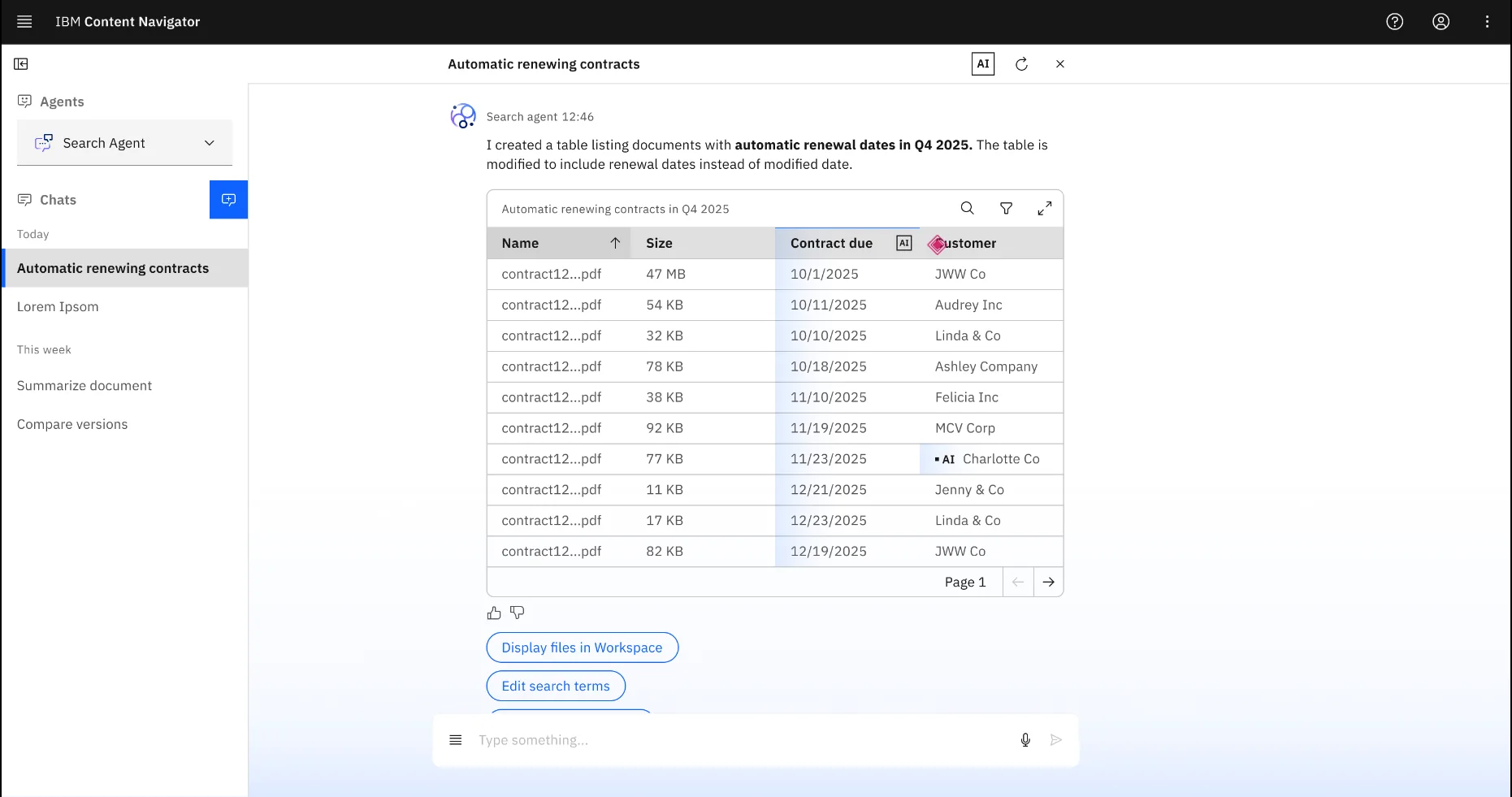
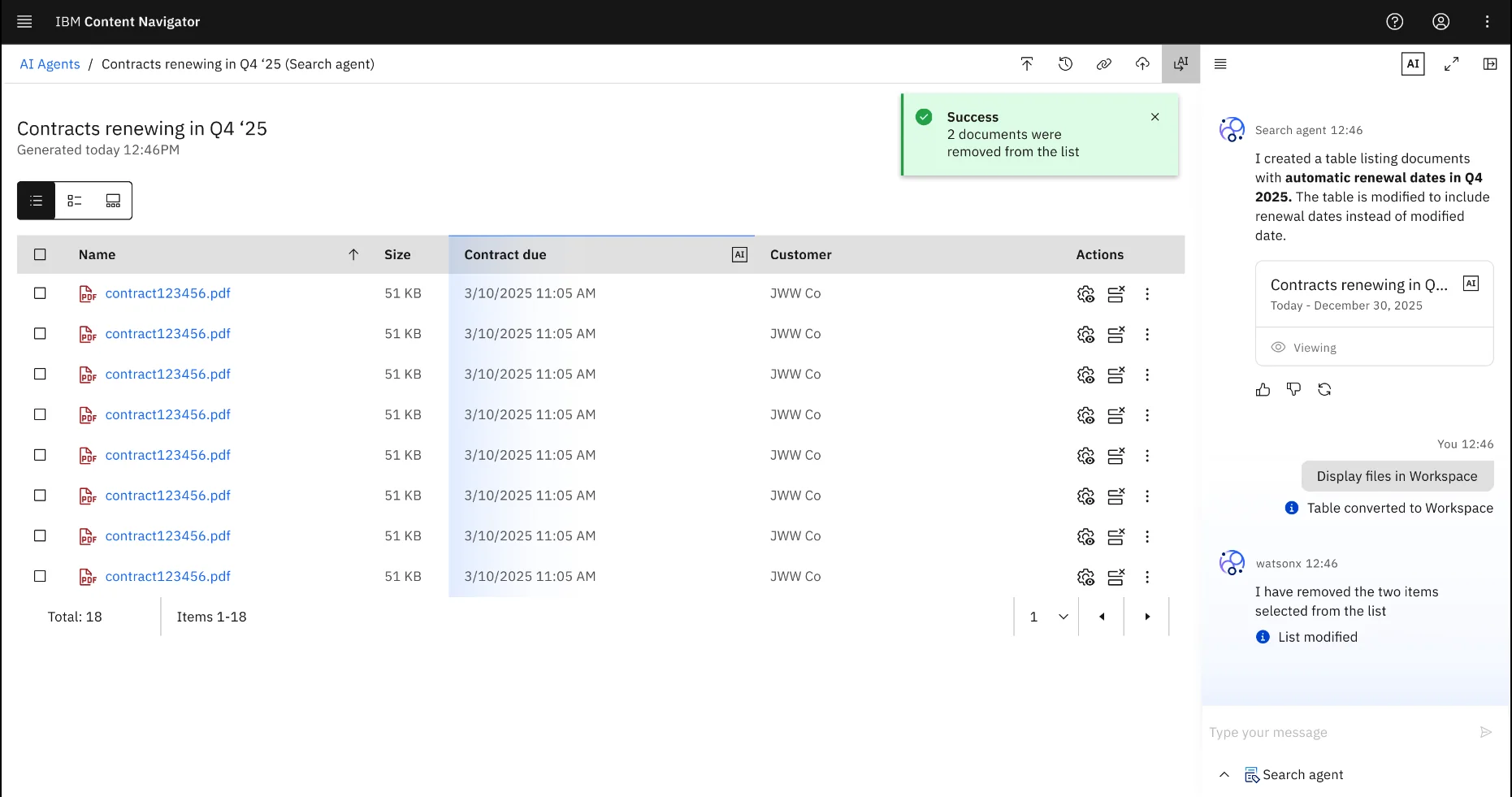
3Make the output editable work
Results came back as structured tables users could refine, including columns and extracted fields, then move into the workspace.
Why: a chat answer gets copied into another tool and loses its context. A table people can edit stays in the system where the next action happens.
4Link every result to its source
Verification patterns connected each extracted value back to the document it came from.
Why: people act on AI output only when they can check it. Source inspection keeps human judgment in the loop before anything is relied on.