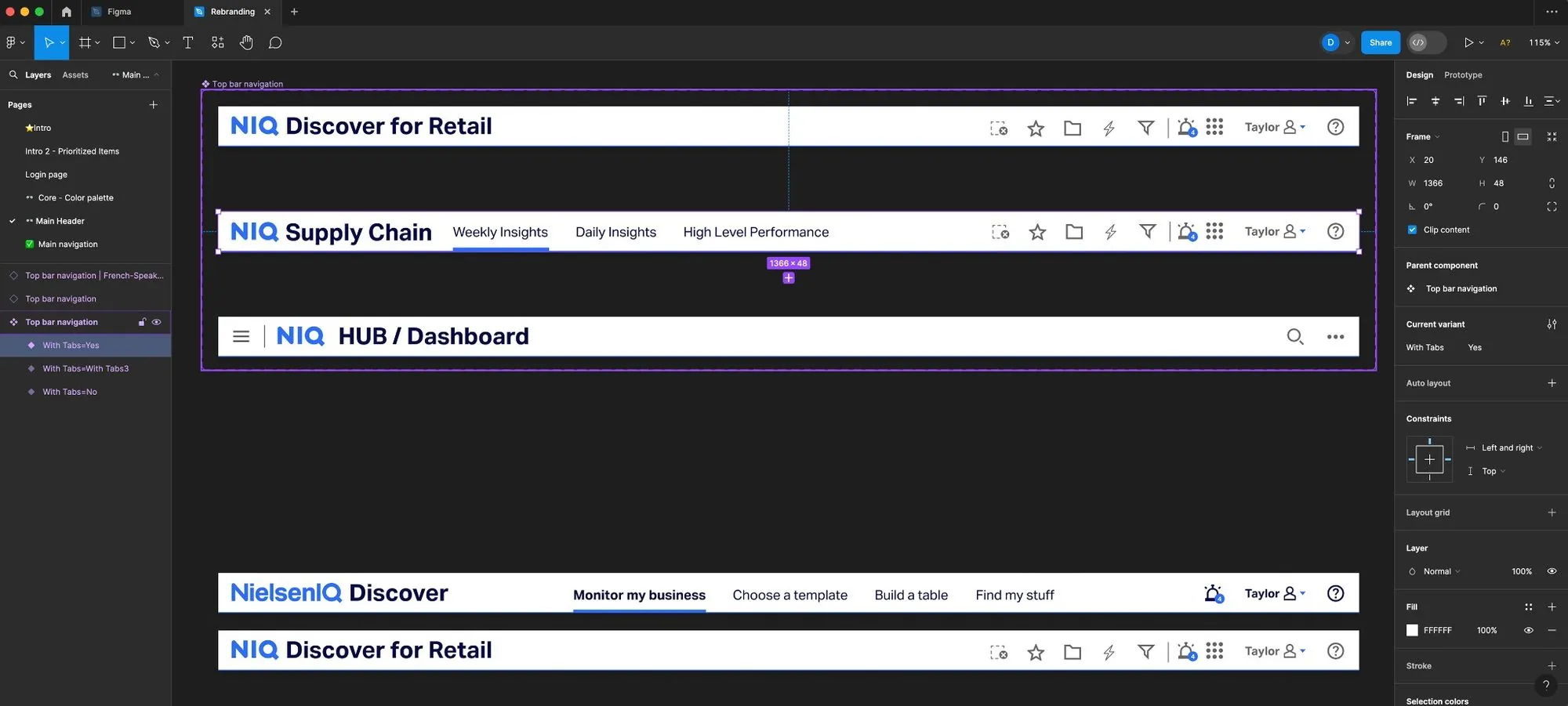
1Treat navigation as infrastructure
A shared top-level structure for moving across product families, modules and dashboards, built on one object model.
Why: at platform scale, navigation is the connective tissue. Products can feel connected without forcing every surface into the same template.
2Give analysis one path: orient, compare, explain
Every dense view follows the same sequence: set scope, compare segments, then explain what drove the change.
Why: the products had depth but did not help users know where to look. A shared sequence keeps the depth and adds a route through it.
3Design for explanation, not display
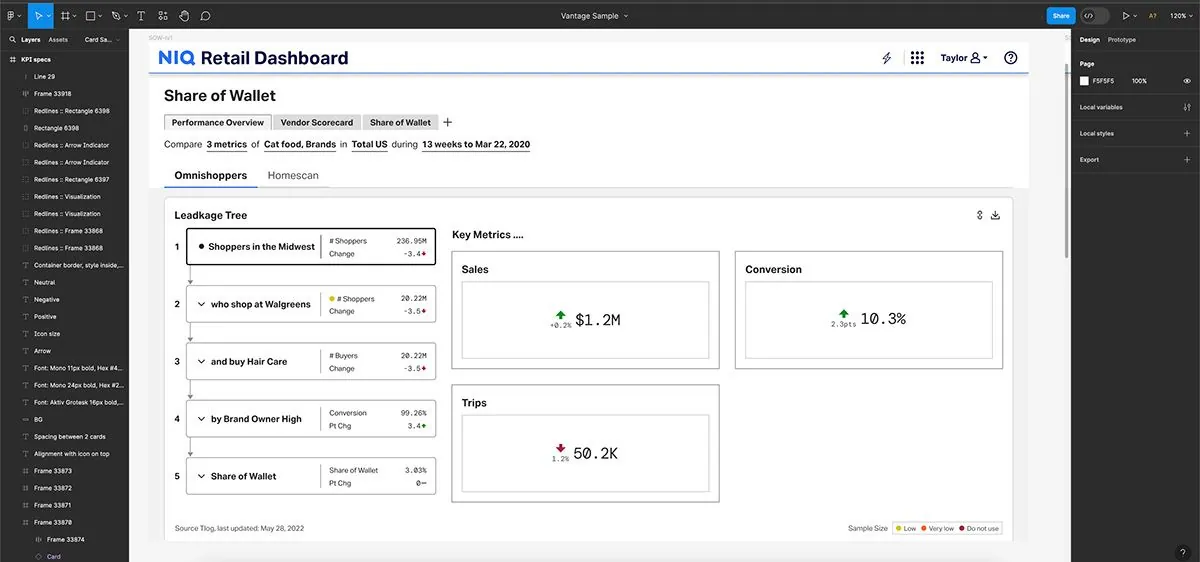
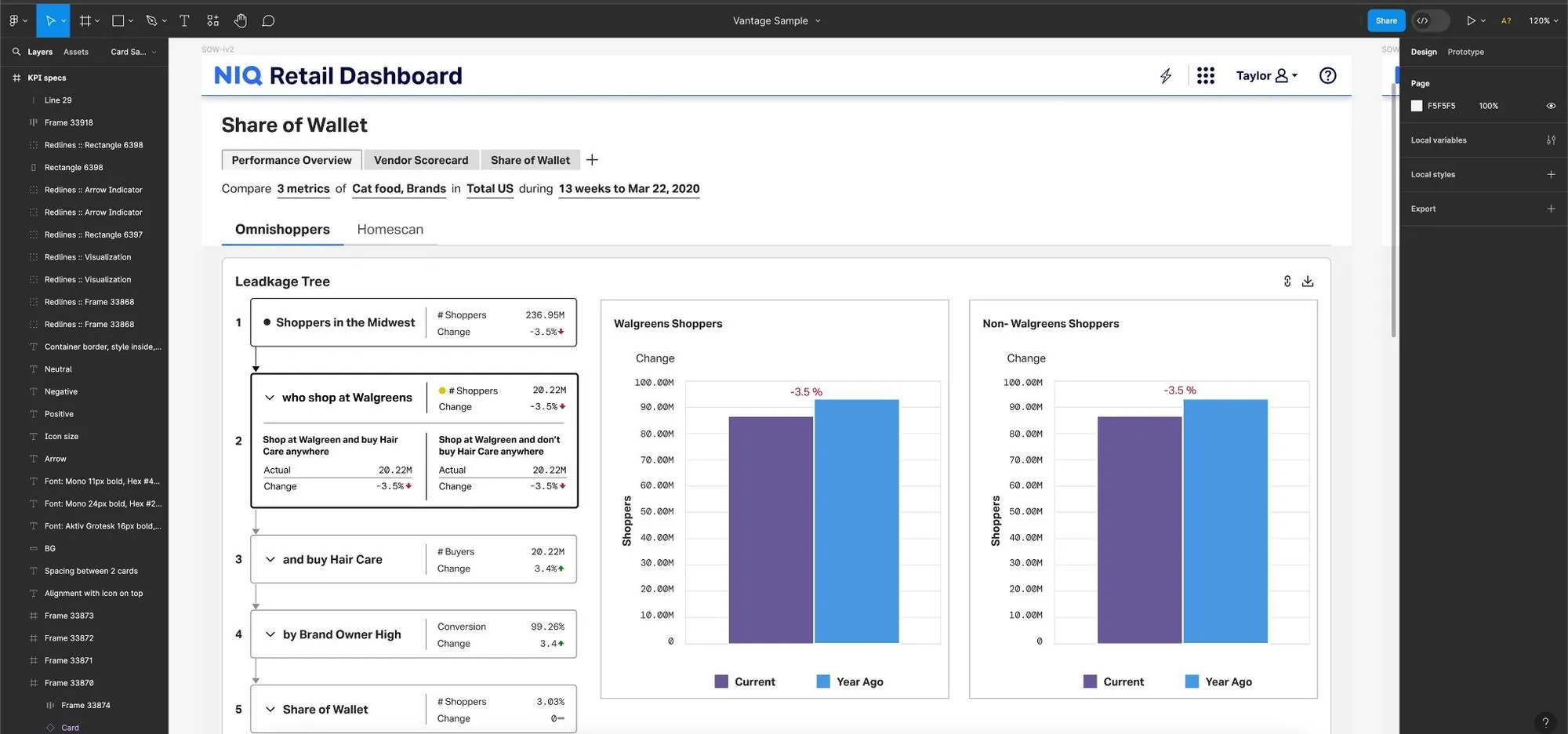
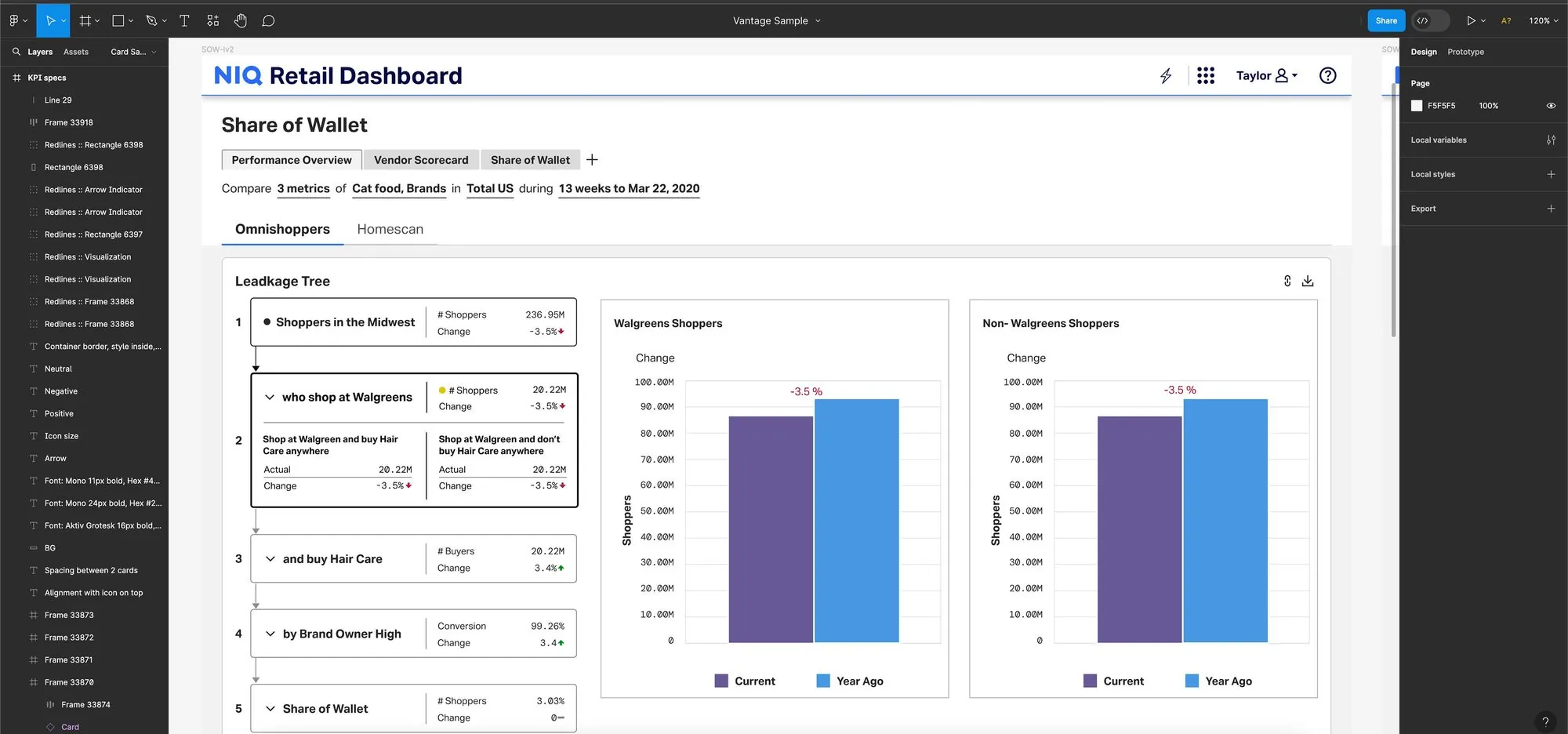
The leakage tree broke analysis into nodes, states and configuration choices, a repeatable way from question to cause.
Why: showing a result without its path leaves users guessing. A node model can be reviewed, built and reused across products.
4Govern beyond components
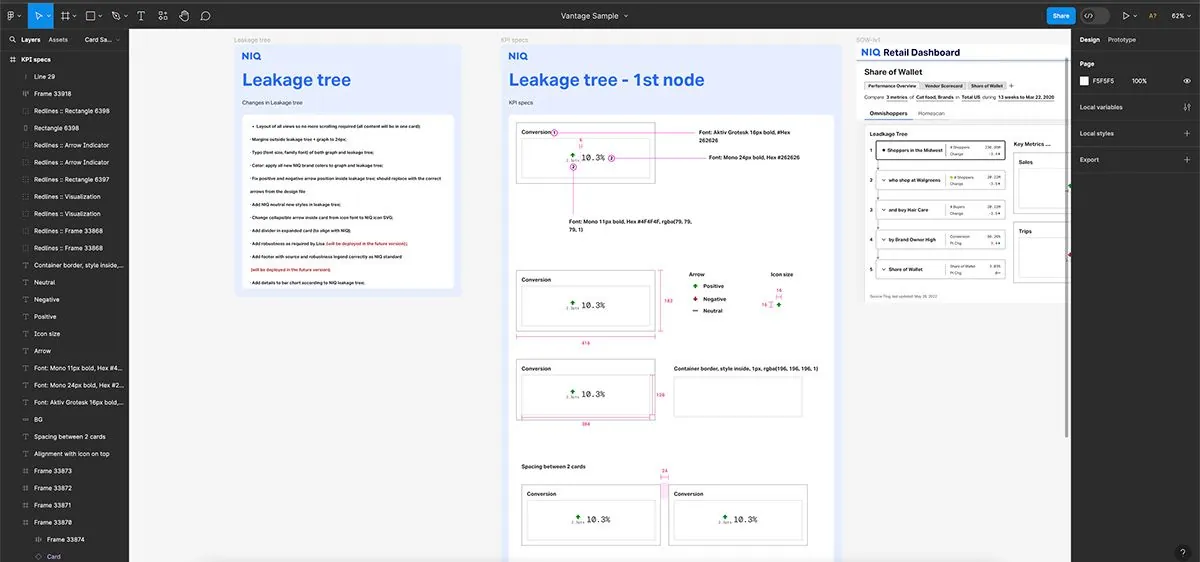
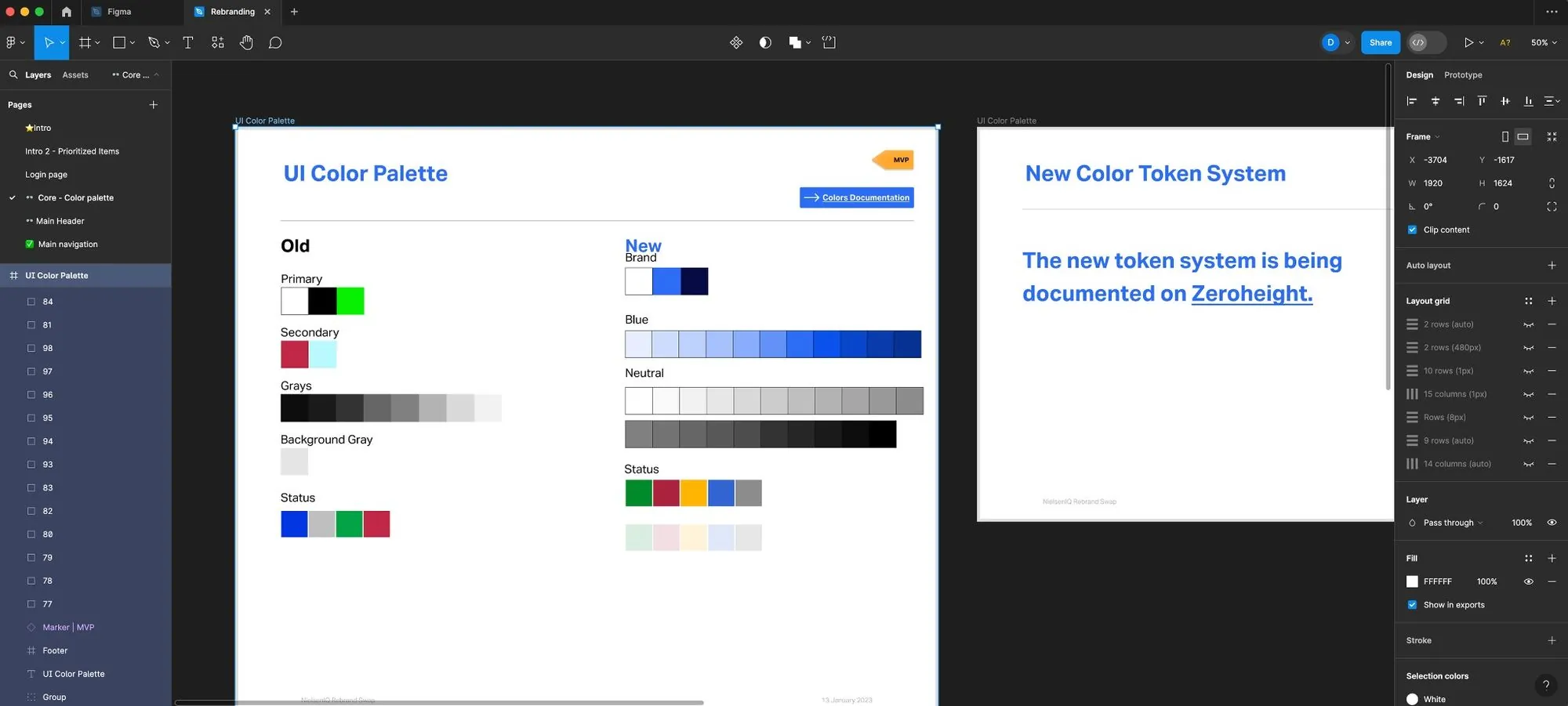
Standards covered navigation, hierarchy, data-visualization rules and documented decisions, with a contribution model.
Why: teams under delivery pressure need to make good calls without escalating every detail. Documented decisions make that possible.